
Your facility's roof is over 15 years old, storm season is weeks away, and your board is asking for documentation that the building envelope is sound. A visual walk-around does not answer that question. An industrial roof inspection provides a documented, defensible record of the membrane's condition, drainage performance, code compliance, and warranty status. This article breaks down exactly what inspectors evaluate, what the paperwork protects, and when Florida law requires it.
What Industrial Roof Inspections Actually Cover
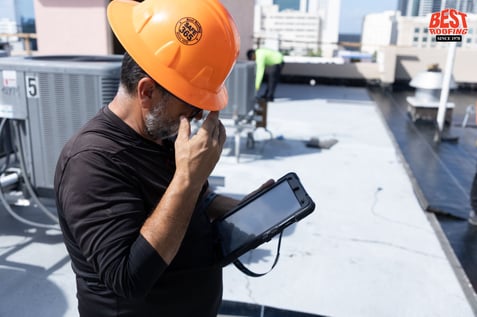
An industrial roof inspection is a documented assessment of a commercial or industrial roof system's membrane condition, drainage performance, flashing integrity, and code compliance. A professional inspection produces a technical record across four functional categories.
Membrane Condition and Surface Defects
Inspectors assess the membrane for blistering, splitting, granule loss, ponding water zones, and adhesion failure. On a TPO, EPDM, or modified bitumen system, even minor surface defects indicate accelerated oxidation beneath the surface. Left undocumented, these translate to denied warranty claims.
Flashing, Penetrations, and Drainage Systems
Improper flashing installation is a leading cause of premature roof failure, according to NRCA. Inspectors check every penetration point, including HVAC curbs, skylights, exhaust vents, and parapet walls. Drain flow rates are tested, and scuppers are checked for blockage or improper slope.
Infrared Moisture Detection
Infrared thermography identifies trapped moisture inside insulation layers without cutting into the roof. Water-saturated insulation loses up to 40% of its R-value and accelerates membrane degradation from below. Documenting wet areas with IR scanning gives you a prioritized repair scope before the damage spreads.
NOA Label and Product Approval Verification
In South Florida, installed products must carry a Miami-Dade Notice of Acceptability (NOA) to meet HVHZ requirements. Inspectors verify that existing materials on your roof match the approved NOA specifications on file. If labels are missing or products were substituted during a prior repair, that gap shows up here.
How Inspections Protect Your Warranty Coverage
Most commercial manufacturer warranties require documented maintenance records to remain valid. Skipping inspections gives manufacturers grounds to void coverage when you file a claim. A twice-yearly inspection schedule, logged and retained, closes that gap.
Best Roofing's Annual Maintenance Plans maintain the documentation trail your warranty requires.
The Cost of Skipping an Inspection
Commercial roof replacement in South Florida runs $8 to $21 or more per square foot, depending on the membrane system, building size, and access conditions. A routine inspection that catches deteriorating flashing or a failed penetration seal costs a fraction of that. Left undetected, those same deficiencies allow water infiltration that saturates insulation, degrades the deck, and turns a repair into a full replacement.
The math is straightforward. A facility manager who schedules twice-yearly inspections builds a documented maintenance history that keeps warranties active, supports insurance filings, and identifies repair scopes before they escalate. One who waits for a visible leak is already past the point where early intervention was possible.
Inspection reports are the primary evidence your insurer uses to evaluate coverage eligibility and premium adjustments.
Wind Mitigation Eligibility in South Florida
A wind mitigation inspection documents specific construction features: roof deck attachment, roof-to-wall connections, roof covering type, and opening protection. Facilities that qualify may qualify for wind mitigation discounts on commercial property insurance. No specific savings amount can be promised, but the documentation is required before your insurer will apply any applicable reduction.
What Your Insurer Requires
Commercial wind mitigation documentation must be completed on your insurer's approved form by a qualified licensed professional. An inspection report signed by an unlicensed or unqualified inspector will not satisfy submission requirements, regardless of how thorough the report is. Confirm your inspector holds an active Florida roofing contractor license before scheduling.
Best Roofing inspectors hold Roofing Contractor license CCC1331459 and General Contractor license CGC1531057, active and verifiable through the Florida Department of Business and Professional Regulation at myfloridalicense.com.
HVHZ Compliance: Why Miami-Dade and Broward Require More Than a Passing Grade
HVHZ compliance means your roof system meets the High-Velocity Hurricane Zone wind design standard of 175+ mph, compared to 150 mph required elsewhere in South Florida.
A Florida Product Approval alone does not satisfy HVHZ requirements. Miami-Dade specifically requires a Miami-Dade NOA issued by the Miami-Dade Building Department. An inspection that verifies HVHZ compliance confirms that:
- Every installed product carries a valid Miami-Dade NOA
- Installation followed the NOA-specified fastening pattern and adhesive rates
- No substitutions were made during repairs or reroof phases
This matters at the time of sale, during permit pull, and when an insurer requests proof of compliance after a wind event.
Florida Milestone Inspection Requirements for Industrial Buildings
Florida law mandates milestone inspections for commercial buildings 3 stories or taller, beginning at 30 years from the certificate of occupancy date, or 25 years if the building is within 3 miles of the coastline. After the first milestone inspection, recertification is required every 10 years.
These are not voluntary. A missed milestone inspection creates liability exposure and can trigger enforcement action from the local building department. If your facility is approaching either threshold, scheduling a professional inspection now gives you time to address any findings before the mandatory window opens. Best Roofing's 31-step inspection and assessment process produces documentation formatted for building department review.
How Often Industrial Roofs Should Be Inspected
NRCA recommends at least twice-yearly inspections (spring and fall) for commercial and industrial roofs.. For roofs older than 15 years, or roofs with heavy foot traffic from HVAC technicians or equipment loads, the recommendation moves to quarterly.
The spring inspection catches winter damage before storm season. The fall inspection closes out the storm season and documents any impact or ponding from summer rains. Both feed into the maintenance record your warranty requires.
Best Roofing's Commercial Roof Maintenance program structures inspections around this cadence, with scheduled visits and digital reporting delivered after each one.
What Qualifies a South Florida Industrial Roof Inspector
Not every inspector can produce documentation that satisfies Florida's regulatory and insurance requirements. For industrial facilities in South Florida, the inspector you hire should meet at least three criteria.
An active Florida roofing contractor license. Verify license status through the Florida Department of Business and Professional Regulation at myfloridalicense.com before signing anything. Best Roofing holds a Roofing Contractor license (CCC1331459), which is active and verifiable.
Demonstrated HVHZ experience. Inspectors unfamiliar with Miami-Dade NOA requirements cannot verify product approval status on-site. If your facility is in Miami-Dade or coastal Broward, confirm the inspector has completed HVHZ projects and understands the difference between Florida Product Approval and Miami-Dade NOA.
Authorization to complete Form WPD-1C. Only qualified licensed professionals can sign Citizens Insurance wind mitigation documentation for commercial properties. An inspection report signed by an unqualified inspector will not satisfy Citizens' submission requirements, regardless of how thorough the report is.
What Happens After the Inspection
Here's what happens next: you receive a written report, a prioritized finding list, and a documented record that protects your position with your insurer, your manufacturer, and your board.
The Inspection Report and Audit Trail
The report includes photographs of every deficiency, GPS-tagged locations on a roof plan, measurements of affected areas, and the inspector's findings against applicable code and NOA requirements. This becomes your audit trail for warranty claims, insurance renewals, permit applications, and milestone compliance filings. Keep it with your building records.
When Repairs Are Recommended
Not every finding requires immediate action. Inspectors classify findings by urgency: immediate life-safety issues, active water infiltration, conditions likely to worsen before the next inspection, and deferred maintenance items.
Frequently Asked Questions
How often should an industrial roof be inspected?
Twice per year at a minimum, spring and fall. Roofs older than 15 years or with frequent rooftop foot traffic should be moved to quarterly inspections. Source: NRCA Roofing Guidelines
What does a commercial roof inspection include?
A professional commercial roof inspection covers membrane condition, surface defects, flashing and penetration integrity, drainage performance, infrared moisture detection, and verification that installed products carry valid Miami-Dade NOA documentation. The result is a written report with photographs, deficiency locations, and a prioritized repair list.
Does a roof inspection help with insurance?
Yes. A documented inspection report supports wind mitigation filings and provides the evidence insurers require to evaluate coverage eligibility. Qualifying properties may be eligible for wind mitigation discounts; no specific savings amount is guaranteed.
What is an HVHZ inspection?
An HVHZ inspection verifies that your roof system meets the High-Velocity Hurricane Zone wind design standard required in Miami-Dade and coastal Broward counties. It confirms that all installed products carry a valid Miami-Dade NOA. Florida Product Approval alone does not satisfy HVHZ requirements. Source: Miami-Dade County Building Department
How long does an industrial roof inspection take?
A standard industrial inspection on a 50,000-square-foot facility typically runs three to five hours on-site. The written report, including photographs and findings, is delivered within two to three business days.
How much does it cost to replace an industrial roof in South Florida?
Commercial roof replacement in South Florida typically runs $8 to $21 or more per square foot, depending on the membrane system, building footprint, and site conditions. Routine inspections that catch early-stage deficiencies prevent repair scopes from escalating to full replacement.
What credentials should a South Florida roof inspector have?
At minimum: an active Florida roofing contractor license (verifiable at myfloridalicense.com), demonstrated experience with HVHZ NOA verification, and authorization to complete Citizens Insurance Form WPD-1C for commercial wind mitigation filings. Confirm all three before scheduling.
Why South Florida Facilities Trust Best Roofing for Industrial Inspections
Best Roofing has operated in South Florida since 1978, completing 2,750+ re-roofing projects annually and handling 7,000+ service calls per year across Palm Beach, Broward, and Miami-Dade counties.
Here's what happens next when you schedule an industrial inspection with Best Roofing:
- A licensed inspector walks the full roof surface, documenting membrane condition, flashing integrity, penetration seals, and drainage performance
- Infrared scanning identifies moisture trapped in insulation layers not visible from the surface
- NOA labels and product approvals are verified against installation records on file
- Every deficiency is photographed, GPS-tagged on a roof plan, and classified by urgency
- You receive a written report within two to three business days, formatted for insurer submissions, warranty documentation, and building department review.
Not just a walk-around, a documented record your board, your insurer, and your warranty holder can rely on. Best Roofing holds Roofing Contractor license CCC1331459 and General Contractor license CGC1531057, active and verifiable at myfloridalicense.com.
Partner with Best Roofing to bring confidence, accountability, and proven field expertise to every phase of your roofing design and delivery.
Related Articles