
When a roof assembly fails after occupancy, and the architect's name is on the drawings, the question isn't which system was specified; it's whether the specification was supported by an independent technical review. Roofing consulting covers system selection, assembly design, Florida code and HVHZ compliance, moisture management, and construction-phase oversight. The goal is to reduce the risk of failure, improve constructability, and protect long-term performance from concept through closeout.
In Florida, the architect who signs and seals the drawings carries direct professional responsibility under Florida Statute §481.229, and roofing is one of the most common sources of post-construction claims on commercial buildings. A roofing consulting relationship changes that exposure before the first nail goes in.
This article explains what roofing consulting actually includes, where Florida law places design responsibility on your firm, and how Best Roofing supports the consulting process on commercial projects across Palm Beach, Broward, and Miami-Dade counties.
What Roofing Consulting for Architects Actually Covers
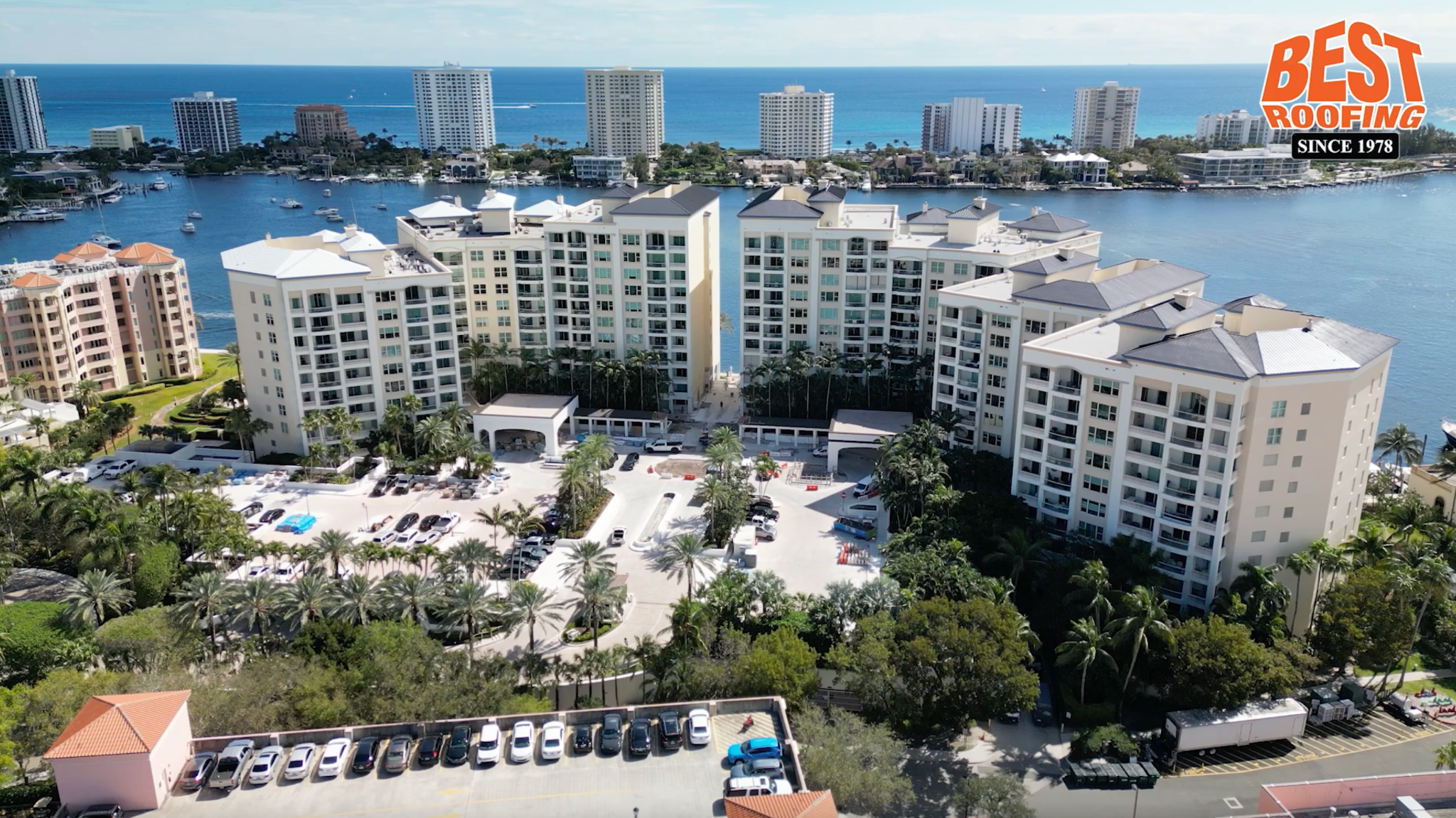
A roofing consultant is not a contractor. The relationship provides objective technical guidance with no product to sell, grounded entirely in performance, compliance, and lifecycle value. Coverage spans four core areas.
System Selection and Assembly Design
The first consulting contribution is selecting the right roofing system for the building's actual use, not a default specification carried over from the last project. For South Florida commercial work, that means evaluating TPO, PVC, KEE, and Modified Bitumen assemblies against:
- The building's occupancy type and expected roof traffic
- Thermal performance requirements under Florida's energy code
- UV intensity, humidity, and wind load exposure specific to the project location
- Drainage configuration and rooftop equipment density
Each system carries a distinct performance profile in this climate. TPO's solar reflectance of 0.79 to 0.87 makes it a strong default for energy-conscious commercial buildings. PVC's chemical resistance makes it preferable where rooftop exhaust or industrial chemicals are present. KEE eliminates the risk of plasticizer migration in standard PVC, offering stronger long-term material integrity. A consultant matches the system to the building, not the specification to the habit.
Moisture Management and Building Envelope Coordination
Most roof failures occur at transitions, not in the membrane field. The locations where design errors concentrate and where post-construction claims originate include:
- Roof-to-wall interfaces and parapet terminations
- Penetrations and rooftop equipment curbs
- Drainage overflow paths
- Air barrier and wall assembly intersections
Roofing consulting addresses moisture management as a whole-envelope problem. In South Florida's high-humidity environment, vapor-drive behavior differs substantially from that in most of the country. A consultant accounts for that in assembly design, not just membrane selection.
Florida Code, HVHZ, and Product Approval Compliance
Florida roofing code compliance is not a checkbox. It is a documented, product-specific requirement that must align with how the system is actually installed.
Under the Florida Building Code 8th Edition (2023), every roofing system must:
- Use products with valid Florida Product Approvals
- Be installed according to the tested assembly configurations
- Meet wind load requirements defined by ASCE 7-22
For projects in Miami-Dade and coastal Broward, the requirements go further. These areas fall within the High Velocity Hurricane Zone (HVHZ), where:
- Products must carry a Miami-Dade Notice of Acceptance (NOA) or Florida Product Approval
- Approval must match the exact assembly and installation method
- Standard "FBC-compliant" labeling alone is not sufficient
A roofing consultant ensures alignment among the specified system, approved products, and permitted installation method, reducing the risk of failed inspections, rejected submittals, or costly corrections during construction.
Construction-Phase Oversight
Specification accuracy does not guarantee installation accuracy. A consultant engaged through construction administration verifies that what was specified is what gets built, documents compliance for the closeout package, and provides the contemporaneous record that protects your firm if performance questions arise after occupancy.
When Florida Law and Project Risk Require Roofing Consulting
HVHZ Projects: When the FBC Requires Architect Sign-Off
In HVHZ regions, architects carry direct responsibility for certain roofing design decisions. The Florida Building Code requires that any alternate method of roof attachment or deviation from standard fastening must be designed, signed, and sealed by a Florida-registered architect or engineer with structural expertise. This responsibility does not transfer to the contractor. It remains with your firm.
A roofing consultant supports this process by providing:
- Wind load analysis for field, perimeter, and corner zones
- Assembly compliance validation against current NOA and FBC requirements
- Product approval verification before documents are issued for the permit
This ensures your signed documents are backed by technical review, not assumptions.
The 25% Re-Roofing Rule
Florida's HVHZ code includes a threshold that directly impacts renovation and addition projects. Under Section 1521.4, if more than 25% of a roof area is repaired, replaced, or recovered within any 12-month period, full code compliance is triggered for the entire affected roof section. This threshold must be evaluated before design is issued for a permit on any renovation project in Miami-Dade or coastal Broward. Missing it creates code exposure that is expensive and disruptive to correct mid-construction.
Institutional, Public, and High-Risk Commercial Projects
In healthcare, education, and public-sector work, roofing consulting is frequently required by owner mandate, not just good practice. These clients require a documented audit trail: compliance records, product approval documentation, installation verification, and a named consultant of record.
Beyond owner requirements, the stakes are higher. A roof failure in a hospital, school, or multi-tenant commercial building carries operational, legal, and reputational consequences that extend well beyond repair costs. Early consulting involvement at schematic design, not construction administration, is where risk is managed rather than documented after the fact.
What Architects Need to Specify Correctly in South Florida
Flat and Low-Slope Systems
Specifying a flat or low-slope roofing system in Florida requires more than selecting an approved membrane type. Assembly decisions, including insulation thickness, fastening method, and drainage configuration, determine whether the system performs at its rated lifespan or fails prematurely under South Florida conditions.
The four primary commercial flat roof systems used in this market:
|
System |
Key Advantage |
Lifespan in Years |
Best Fit |
|
TPO |
Solar reflectance 0.79-0.87, energy-efficient |
20-30 |
Commercial buildings, retail, office |
|
PVC |
Superior chemical resistance |
20-30 |
Restaurants, industrial, exhaust-exposed rooftops |
|
KEE |
No plasticizer migration, stronger long-term integrity |
20-30 |
High-performance applications requiring PVC durability |
|
Modified Bitumen |
Multi-ply, puncture-resistant, foot-traffic-tolerant |
20-25 |
Roofs with heavy maintenance traffic |
Wind Uplift, Fastening Patterns, and NOA Compliance
In South Florida, wind uplift design is a primary specification driver, not a secondary check. HVHZ design wind speeds reach 170 mph in certain coastal zones, and the FBC 8th Edition updated wind load calculations to align with ASCE 7-22. Fastening patterns must be calculated separately for the field, perimeter, and corner zones, as each zone carries significantly different design pressures.
Every roofing product specified for a Miami-Dade County or coastal Broward County project must carry a valid Miami-Dade County NOA. That NOA is application-specific: it covers the product installed in a specific way, on a specific assembly, with specific fastening. A consultant verifies that the specified product, fastening pattern, and assembly match the NOA requirements before installation begins, not after a failed inspection.
Drainage, Slope Requirements, and Code Compliance
Drainage design is one of the most common sources of roofing failure in South Florida. The Florida Building Code requires:
- A minimum slope of 1/4 inch per foot for low-slope roofs, unless an engineered exception is documented
- Secondary overflow drainage systems positioned at least 2 inches above primary drains
- Tapered insulation systems on large commercial roofs, designed specifically for the building's layout and drain locations
These are not field decisions. They must be designed during the architectural phase and clearly shown in construction documents. A roofing consultant reviews drain placement, tapered insulation design, and overflow compliance to ensure the system performs as intended under real Florida rainfall conditions.
Frequently Asked Questions
When does Florida require architect involvement in roofing design?
Under HVHZ provisions of the Florida Building Code, any alternate method of roofing attachment must be prepared, signed, and sealed by a Florida-registered architect or engineer proficient in structural design. Architects also bear design responsibility for drainage systems on projects where existing drain configurations are modified or redesigned.
How much does roofing consulting cost?
Consulting fees vary by project scope and complexity. On commercial projects, they are typically a small fraction of total construction cost, and they routinely prevent far more expensive failures, redesigns, or post-construction claims. The cost of getting the specification wrong on a South Florida commercial roof is not small.
Does roofing consulting protect my firm's professional liability?
Yes. Independent technical review, constructability verification, and documented compliance create a contemporaneous record of due diligence. Under Florida Statute §481.229, design professionals carry ongoing responsibility for building performance. A roofing consultant provides the technical backing for that responsibility.
Can a roofing consultant protect a manufacturer's warranty?
Yes. Manufacturer warranties on commercial roofing systems are application-specific; the assembly must match the product approval requirements exactly, and installation must follow the approved method. A consultant verifies that your specified assembly meets the warranty referenced in the project documents before installation begins. Note that manufacturer warranties, including those up to 20 years in duration, typically exclude storm damage, acts of God, and failure from improper maintenance terms that should be clearly disclosed in project documentation.
When is it too late to involve a roofing consultant?
Early involvement in design development is where consulting delivers the greatest value. However, consultants contribute meaningfully at almost any stage: forensic evaluation of an existing roof, mid-construction quality assurance, post-construction performance disputes, or re-roofing scope analysis on occupied buildings.
Consulting Partners Choose Best Roofing
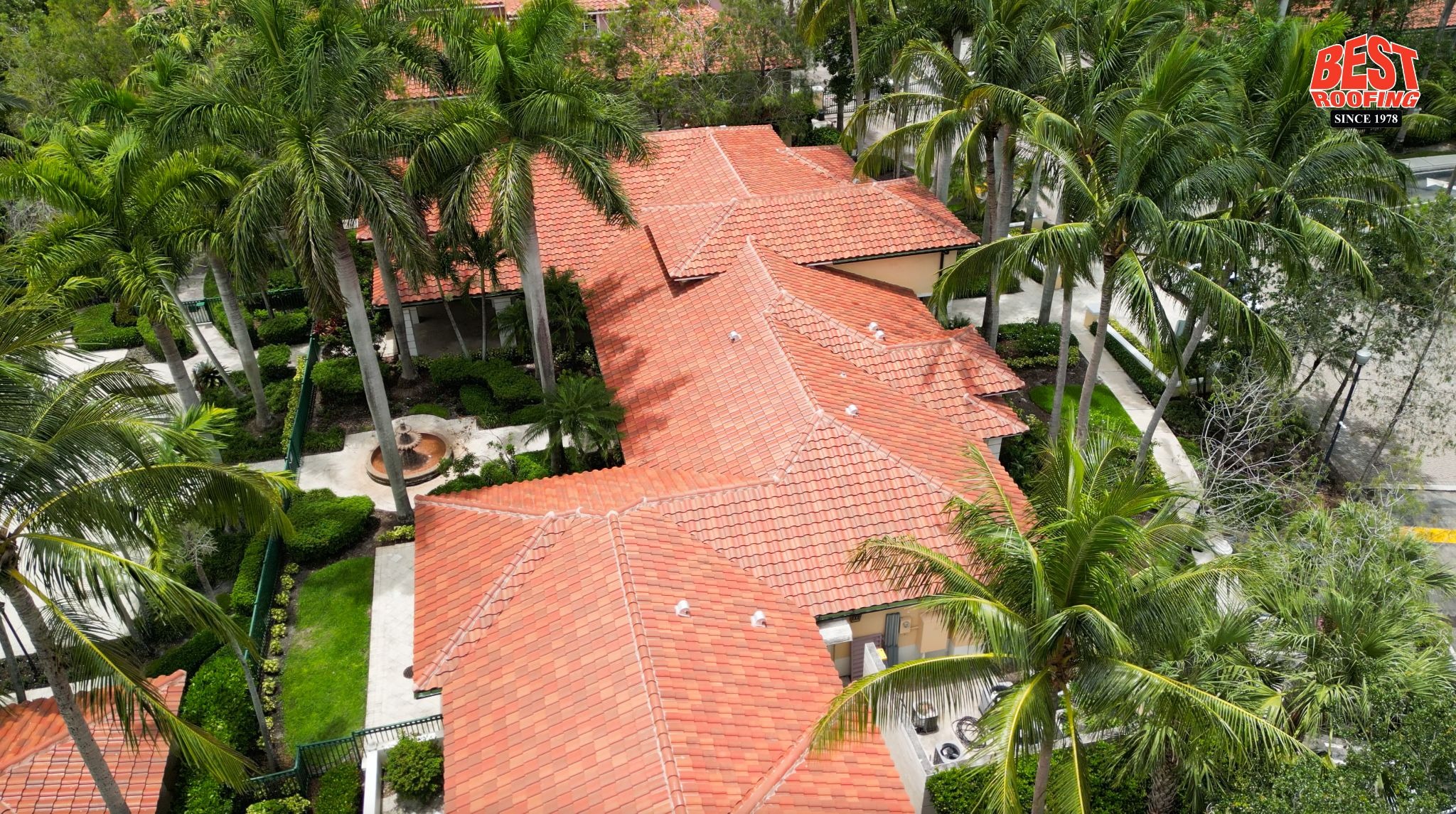
Best Roofing has completed 2,000-plus re-roofing projects annually across Palm Beach, Broward, and Miami-Dade counties, operating continuously since 1978 through every hurricane season, every code cycle, and every HVHZ update. Recommendations come from a team that has installed every system they specify, in every wind zone, under current FBC requirements.
Credentials that matter to architects evaluating a consulting partner:
- GAF Master Elite (top 2 to 3% of U.S. roofing contractors)
- Carlisle Authorized Applicator
- Tremco Elite Certified (the highest designation tier from each manufacturer partner)
Architects partner with Best Roofing for:
- Practical, buildable specifications grounded in how South Florida systems actually perform
- HVHZ compliance documentation, including product approval verification, NOA confirmation, and fastening pattern review for Miami-Dade and coastal Broward projects
- Construction-phase oversight through a proprietary 31-step process that produces the documentation your closeout package requires
- 24/7 emergency response with 100-plus fleet vehicles and one of South Florida's largest service divisions
To understand what a well-maintained roofing program looks like over the life of a building you design, the commercial roof maintenance plan resource is a useful reference for post-closeout conversations with your clients.
Partner with Best Roofing to bring confidence, accountability, and proven field expertise to every phase of your roofing design and delivery.
Related Articles