
A warehouse roof does far more than keep rain out. For Florida property managers, it protects inventory, equipment, people, and the day-to-day operations your tenants rely on. When a warehouse roof fails, the impact is immediate: disruptions, safety risks, and costly repairs that could have been prevented.
This guide gives you clear, practical answers about warehouse roof systems, how they perform in Florida’s climate, what problems to look out for, and how to extend the life of your asset with proactive inspection and maintenance.
If you manage industrial or distribution buildings across South Florida, this overview will help you make confident decisions about your warehouse roof starting today.
What Is a Warehouse Roof?
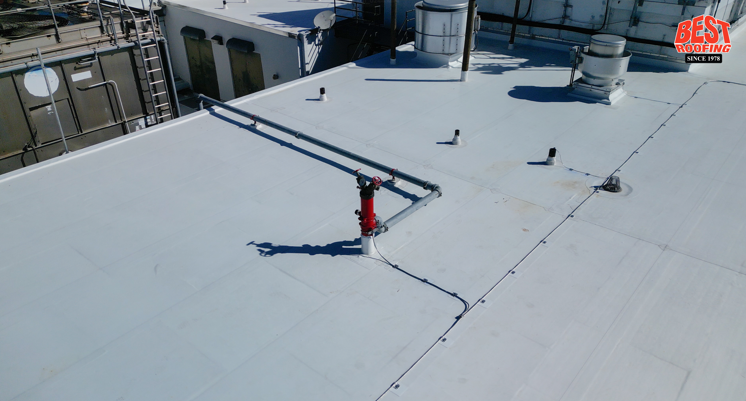
A warehouse roof is typically a large-scale, low-slope roofing system engineered to handle heavy equipment loads, long drainage runs, and exposure to Florida’s intense sun and severe weather. Most warehouse roofs fall into one of five system types:
- Modified Bitumen
- Built-Up Roofing (BUR)
- Single-Ply (TPO and PVC)
- Metal
- Roof Coating Systems
Each behaves differently in heat, wind, and moisture making your choice of system, and your maintenance plan, critical to supporting long-term performance.
Why Florida Warehouses Need a Different Roof Strategy
Florida introduces unique stressors that directly impact warehouse roofs:
- Extreme UV exposure that accelerates surface aging compared to milder climates.
• Heavy rainfall and ponding water on wide, low-slope decks
• High foot traffic from HVAC, mechanical units, and camera lines
• Strong winds that test fasteners, seams, and terminations
• Coastal corrosion, especially on metal systems
This is why Best Roofing emphasizes annual industrial roof inspections, documented condition reports, and clear scopes property managers can take to their boards or asset teams.
The 5 Most Common Warehouse Roof Types in Florida
1. Modified Bitumen (Mod Bit)
Modified bitumen is a reinforced asphalt membrane blended with polymer modifiers for added flexibility and impact resistance. It performs well on Florida warehouses that see:
- Heavy mechanical traffic
- High risk of storm damage
- Frequent rooftop activity
Pros:
- Strong puncture and tear resistance
- Excellent waterproofing
- Predictable, proven performance
Cons:
- Higher material and labor cost
- Longer installation timeline
This type of warehouse roof can provide long service life when properly designed, installed, and maintained (service life varies by system and conditions).
2. Built-Up Roofing (BUR)
BUR systems use multiple layers of asphalt and ply sheets. These roofs have been around for over a century and still perform well on industrial buildings.
Pros:
- Thick, redundant layers
- Long service life when maintained
- Excellent UV resistance
Cons:
- Long installation time
- Heavy weight
- Limited flexibility
While BUR is not installed as often today, Florida warehouses with older built-up systems can still get strong performance with appropriate maintenance or restoration options.
3. Single-Ply (TPO and PVC)
Single-ply membranes remain a top choice for modern warehouses due to affordability, speed of installation, and reflective surface options.
TPO – Popular for Florida warehouses because of its reflective white surface and UV resistance
PVC – Performs well in chemical-exposed environments
Pros:
- Cost-effective
- Lightweight
- Fast installation
- High reflectivity options depending on the membrane type
Cons:
- Vulnerable to punctures
- Seams can fail without maintenance
- Service life varies widely based on installation quality and maintenance
Most single-ply warehouse roof systems have service-life ranges determined by membrane thickness, installation, and maintenance practices.
4. Metal Warehouse Roofs
Metal is one of the most durable materials used on warehouse and industrial facilities. Florida buildings often use:
- Steel (most common)
- Aluminum (corrosion-resistant)
- Zinc (highly resistant) in coastal environments
Metal systems can be standing seam or exposed-fastener.
Pros:
- Long service life when properly maintained
- Excellent wind resistance
- Fast installation
- High reflectivity options
Cons:
- Higher upfront cost
- Fastener movement issues if not maintained
- Expansion/contraction challenges in Florida heat
Metal roofs are ideal for warehouses with complex shapes, long spans, or high wind-load requirements. Engineering and attachment design must follow applicable codes and manufacturer requirements.
5. Liquid-Applied Roofing (Coating Systems)
Liquid-applied systems silicone, acrylic, or urethane are installed over an existing roof to restore it and avoid a full replacement.
Pros:
- Can be more cost-effective than replacement depending on assembly condition.
- Seamless, watertight membrane
- Excellent UV protection
- Minimal business disruption
Cons:
- Dependent on condition of existing roof
- Not ideal for areas with structural damage
For Florida warehouses experiencing ponding water, silicone coatings provide exceptional performance.
Most Common Warehouse Roof Issues We Find in Florida
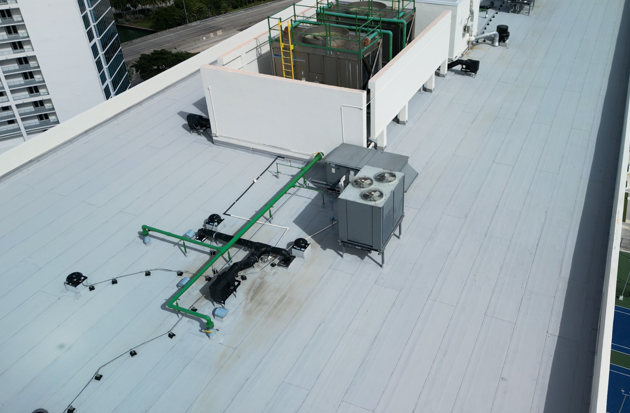
During extensive numbers of industrial roof inspections, we consistently see the same issues:
- Clogged internal drains
- Loose or backed-out fasteners
- Open membrane seams
- Cracked flashing
- Ponding water on large spans
- UV-related surface breakdown
- Metal corrosion at fasteners or laps
- Damage around mechanical units
Most of these problems start small. A stuck drain or loose fastener can turn into major repair costs if left unaddressed.
That’s why Best Roofing’s inspection reports include clear photos, explanations in plain language, and repair priorities ranked by urgency so you know exactly what to do next.
How Florida Property Managers Should Maintain a Warehouse Roof
1. Schedule a professional inspection at least once per year
Florida’s environment demands annual documentation to meet manufacturer maintenance expectations and reduce risk.
2. Keep drains and scuppers clear
Even one clogged drain can cause structural strain and membrane damage.
3. Protect the roof from untrained foot traffic
Mechanical contractors often damage membranes unintentionally. Use walk pads, defined paths, and contractor guidelines.
4. Address small repairs immediately
Fastener replacements, seam repairs, and flashing touch-ups prevent major failures.
5. Consider a restoration before a replacement
Coating systems, reinforcement layers, or partial recoveries can extend life significantly and avoid a full tear-off.
When to Replace a Warehouse Roof Instead of Repairing It
You may need a replacement when:
- Water intrusion is widespread
- Structural deck damage is present
- Multiple layers already exist
- Wind uplift testing fails does not meet required performance criteria
- Aged membranes have lost flexibility
A professional evaluation will tell you whether restoration, recovery, or full replacement is the most cost-effective option.
Why Florida Property Managers Choose Best Roofing
For over four decades, Best Roofing has helped commercial and industrial clients across South Florida protect their buildings with:
- Transparent inspections
- Detailed photo documentation
- Code-compliant solutions
- Reliable crews trained for large industrial facilities
- Maintenance programs that extend roof life
When you manage warehouse operations, you can’t afford guesswork. You need clarity, accurate reporting, and a partner who understands industrial roofs in our climate.
Get a Warehouse Roof Inspection You Can Use Right Away
If you’re responsible for a warehouse or industrial facility in Florida, now is the best time to get ahead of issues before peak storm season.
Book a commercial roof inspection today.Our team will document conditions, identify risks, and give you a clear plan your board or asset managers can act on.
Related Articles