If you manage or own an industrial property in Florida, you know your roof is one of your highest risk assets. It protects inventory, machinery, tenants, workers, and building operations from heat, storms, humidity, and seasonal extremes. Yet many issues remain invisible until water reaches the interior. By that point, problems can spread across insulation, fasteners, decks, and equipment.
A routine industrial roof inspection is one of the most effective ways to prevent emergencies, control lifecycle costs, and protect your budget. At Best Roofing, trained inspection personnel inspect thousands a large number of industrial roofs every year across South Florida. The goal is simple. Give property managers clarity, documentation, and a clear path forward before small issues become expensive failures.
Let’s walk through what an industrial roof inspection involves, the problems it uncovers, and how to prepare your facility for a thorough evaluation.
Why Industrial Roof Inspections Matter
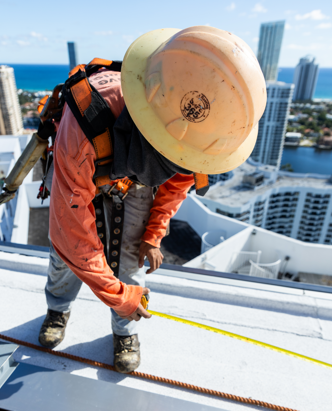
Industrial roofs face different pressures than typical commercial buildings. Manufacturing, food processing, distribution, and fabrication facilities all place demands on the roof that go far beyond weather. Equipment vibrations, chemical exhaust, high heat, and heavy foot traffic can accelerate deterioration.
An industrial roof inspection helps you:
- Catch early warning signs before they lead to system failures
• Protect equipment, inventory, and operations
• Maintain warranty compliance alignment with manufacturer maintenance requirements
• Identify the true source of leaks (where visible symptoms may not reflect the origin)
• Document conditions for boards, insurers, and capital planning
• Support better budgeting for repairs and replacements
Waiting until moisture reaches the interior is not a strategy. Water usually finds the path of least resistance, which means the visible leak is rarely the starting point. An inspection provides evidence-based findings and reduces guesswork.
The Best Roofing Forensic Approach
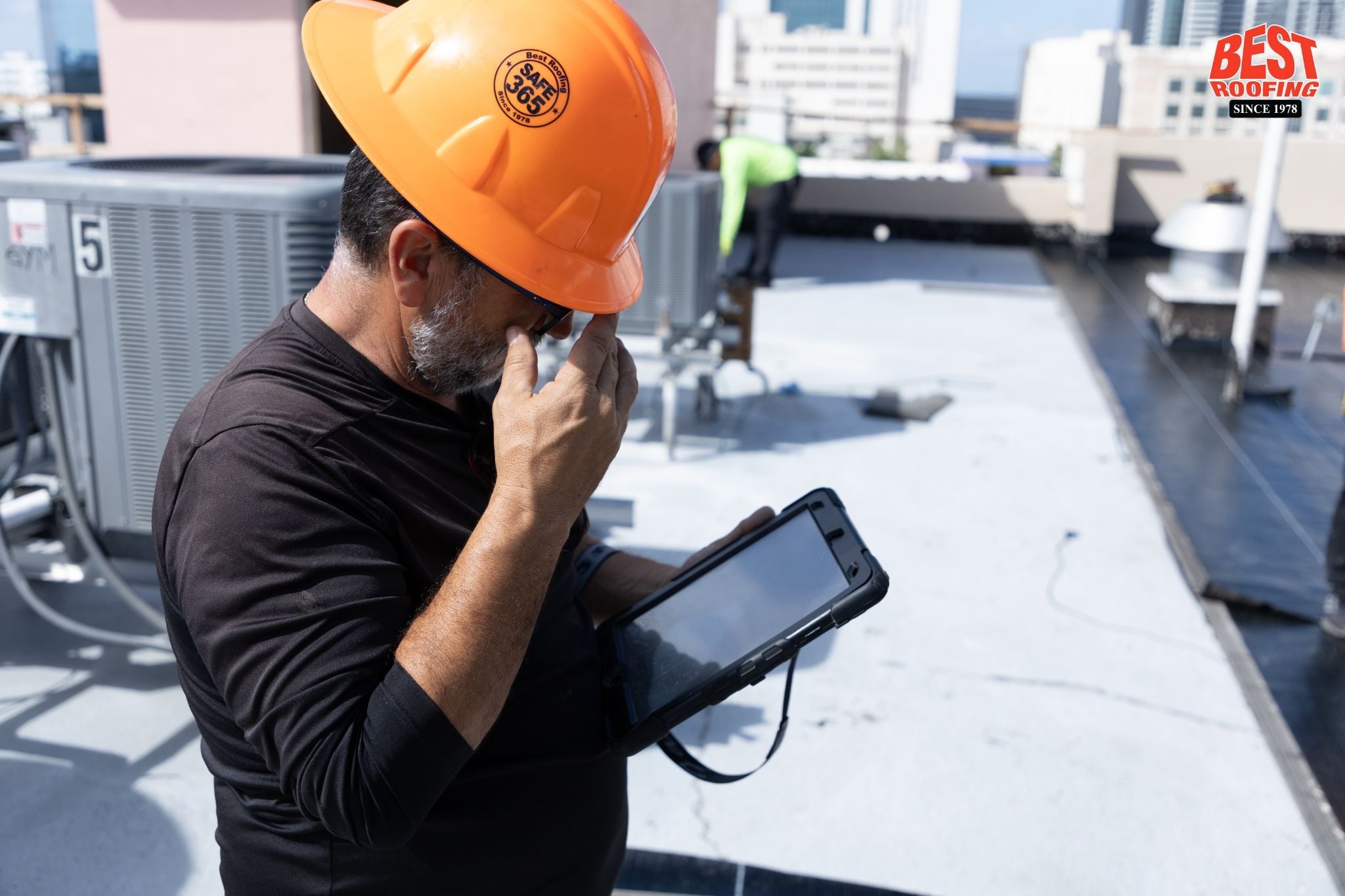
At Best Roofing, inspections are handled by trained Forensic Roof Specialists. These are licensed professionals trained roofing professionals who evaluate roof conditions, document deficiencies, and identify contributing factors within the scope of a non-destructive roof inspection.
They evaluate the structure, test the system (using non-destructive methods unless otherwise approved), identify failure points, and recommend repairs, restoration, or replacement based on documented field observations.
A forensic inspection provides:
- A detailed diagnosis of what is failing of observed deficiencies
• Documentation with photos, marked diagrams, and recommended actions
• Verification of what is working correctly
• Budget estimates for repair, restoration, or replacement
• Maintenance planning to help extend system life
Industrial properties often call us after another contractor claims the roof needs to be replaced. In many cases, our team finds a restoration solution or targeted repair program that saves the owner significant capital may reduce capital expenditure compared to full replacement, depending on condition.
What an Industrial Roof Inspection Includes
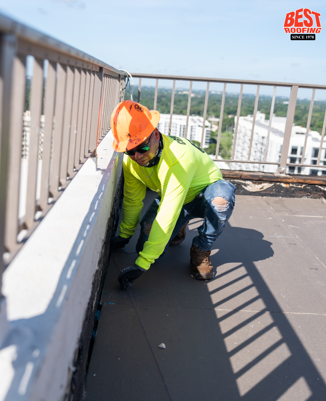
Every Best Roofing inspection follows a structured, repeatable process designed to identify issues that are often hidden beneath the surface. Below is a simplified breakdown of the main steps.
1. Walking the Entire Roof
The specialist walks the full roof surface, often more than once. This step reveals membrane behavior, seam performance, surface wear, and patterns that may indicate deeper problems. During this phase the inspector compares field conditions to original plans available documentation and manufacturer requirements where applicable.
2. Checking Penetrations
Industrial roofs have more penetrations than most buildings. These include exhaust vents, curbs, piping, stacks, skylights, HVAC units, and drains. Penetrations are high-risk areas. A single loose flashing or cracked boot can allow water to enter the assembly.
3. Drainage Assessment
Industrial roofs can accumulate debris quickly, especially near equipment. The inspection includes checking drains, scuppers, gutters, and downspouts. Water that cannot move will find its own path, which often results in interior leaks and saturated insulation.
4. Selective Core Cuts
A core sample helps verify the depth, condition, and moisture level of the underlying assembly. Core cuts are not always required, but they are used when the inspector needs to confirm suspected moisture or evaluate substrate integrity. Core cuts are performed only with owner authorization, and all samples are patched according to manufacturer and industry guidelines.
5. Equipment Review
Many industrial roofs support heavy or complex equipment. Fans, blowers, AC units, refrigeration systems, and mechanical lines all contribute heat and vibration. The inspection evaluates sealants, support pads, attachment points, and transitions. (without altering or disconnecting mechanical systems).
What Inspectors Look For
During an industrial roof inspection, our team looks for conditions that indicate structural movement, membrane failure, or moisture intrusion. Common findings include:
- Cracks, splits, and blisters
• Ponding water and slow drainage
• Rusted metal components
• Loose fasteners or open seams
• Debris buildup around equipment
• Biological growth such as algae or lichen
• Shrinkage in older membranes
• Compromised flashings around penetrations
• Deterioration of coatings or surface granules
Even one of these issues can grow quickly under Florida’s hot, wet climate. Early identification is the key to controlling costs.
When Industrial Roof Inspections Should Occur
Best Roofing recommends industrial property managers follow a consistent inspection schedule This keeps warranties intact to support manufacturer maintenance expectations and reduce risk during storm season.
The ideal schedule includes:
- Twice per year inspections, typically spring and fall
• A full inspection after any major storm
• Additional reviews after heavy rooftop work or new equipment installation
Many industrial clients also walk their roofs monthly to check for debris, ponding, or visible damage. A professional inspection should still be completed to provide accurate diagnosis and documentation.
How to Prepare for an Industrial Roof Inspection
Preparing the roof in advance helps the inspection run smoothly and ensures more accurate results.
- Clear debris from the roof
• Ensure drains and gutters are open
• Identify interior leak locations
• Provide access to mechanical rooms when needed
• Make sure the roof dry if infrared scanning is planned and approved - Notify tenants or departments if equipment must be shut down
A clean and accessible roof allows the specialist to see issues clearly and provide a precise report.
What Happens If Issues Are Found
Once the inspection is complete, your Forensic Roof Specialist inspection professional explains the findings in clear, practical language. You receive photos, marked diagrams, and a prioritized plan of action. From there, you can move forward with:
- Targeted repairs
• Restoration programs
• Replacement planning
• Maintenance recommendations
The purpose is not to sell you a specific solution. The purpose is to help you protect your asset and make informed decisions based on evidence.
Why Industrial Buildings Need Preventive Maintenance
Industrial facilities rely heavily on their roofs. A leak near electrical systems, production lines, or storage areas can cause operational shutdowns, safety risks, and major financial losses. Preventive maintenance minimizes these risks.
A strong maintenance program includes:
- Scheduled inspections
• Debris removal
• Seam and flashing checks
• Drainage cleaning
• Documentation for warranties and insurance
Industrial roofs rarely fail all at once. They fail in stages. Maintenance identifies those stages early.
Protect Your Facility With a Best Roofing Industrial Roof Inspection
If you oversee a warehouse, factory, distribution center, or production facility, you need accurate visibility into the condition of your roof. Whether you are preparing for budget season, facing recurring leaks, or planning capital improvements, an industrial roof inspection gives you the clarity you need.
Best Roofing has helped Florida properties protect their assets for nearly five decades over four decades (confirm exact figure for corporate consistency). Our trained Forensic Roof Specialists inspection professionals provide accurate assessments, transparent recommendations, and documentation-based insights.
Schedule your industrial roof inspection with Best Roofing today and get a clear, Florida-focused plan to protect your operations, people, and property.
Related Articles