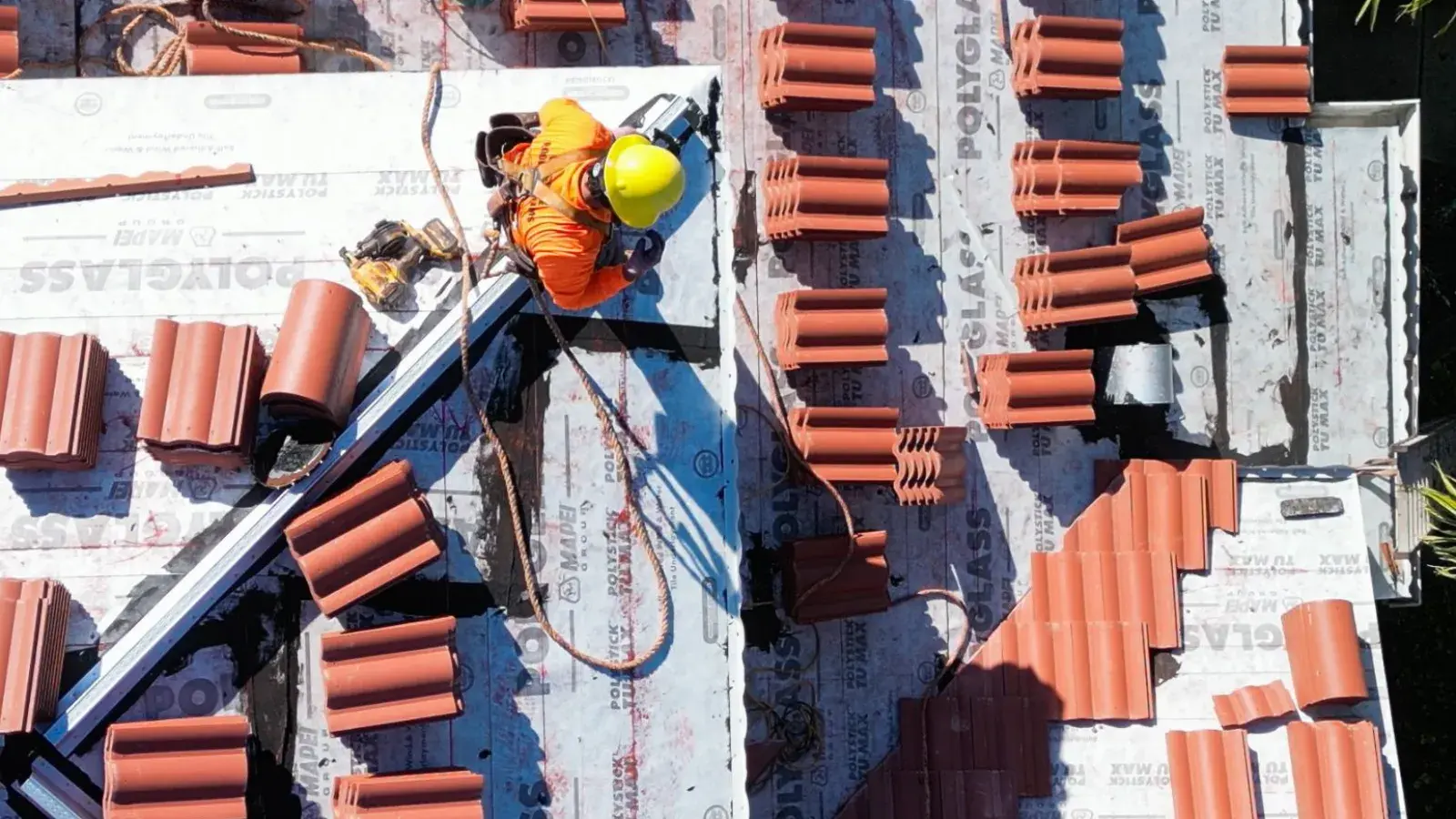
When you manage or own an industrial property in Florida, your roof isn’t just part of the building it’s a critical asset that protects equipment, inventory, tenant operations, and your budget. Whether you oversee a warehouse, manufacturing facility, distribution center, or mixed-use industrial park, choosing the right system plays a major role in long-term performance and lifecycle cost.
In this guide, we break down the most common industrial roofing types used across Florida and what you should consider when planning repairs, replacements, or upgrades. The goal: help you make confident, well-informed decisions that protect your property and support long-term operational planning.
What Are the Main Industrial Roofing Types?
Answer first: Industrial roofs typically fall into eight primary system categories—metal, modified bitumen, BUR, TPO, PVC, roof coatings, concrete, and green roofs. Each performs differently based on your facility’s age, slope, environmental exposure, and operational demands.
Below, we walk through each type and where it fits best for Florida buildings.
1. Metal Roofing Systems
Metal roofing remains one of the most durable options for industrial properties, especially those dealing with high winds, heavy equipment vibration, or long-term exposure to Florida’s heat and coastal conditions.
Best for: Manufacturing buildings, industrial campuses, distribution facilities
Why it works: Strength + long lifespan
Benefits:
- 30–40+ year service life Long service life when properly maintained (service life varies by metal type, coating, and environment)
- Excellent wind resistance
- Fire and impact protection
- Adaptable for low-slope industrial buildings (when engineered for the specific slope and attachment)
- Highly recyclable and energy efficient and may support energy-efficient design when combined with appropriate insulation or reflective finishes
Metal systems are not ideal for flat roofs, but they perform strongly on appropriate low-slope structures when engineered to manufacturer and code requirements.
2. Modified Bitumen (Mod Bit)
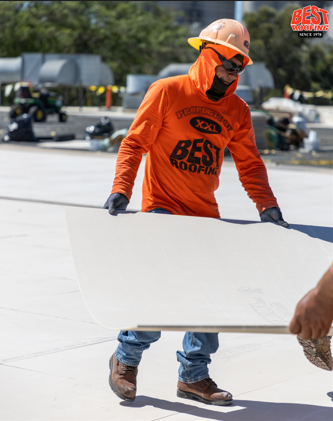
Modified bitumen is a multi-layer asphalt-based system built for durability. It’s used frequently in older industrial buildings with little to no roof slope.
Best for: Legacy buildings, schools, municipal facilities
Why it works: Multi-ply strength
Benefits:
- Outstanding puncture and tear resistance
- Performs well in cooler temperatures (beneficial during cold fronts) Stable performance across the temperature ranges typical in Florida
- Handles heavy foot traffic
- Low maintenance
- Reliable performance for 20+ years (service life varies by number of plies and maintenance)
Because many Florida industrial buildings were built before single-ply membranes became popular, modified bitumen is still widely used during reroof or recovery projects.
3. Built-Up Roofing (BUR)
BUR often called “tar and gravel” is one of the longest-standing roofing systems in industrial settings. It provides excellent redundancy because of its multiple layers.
Best for: Facilities with high rooftop activity
Why it works: Layered durability and leak resistance
Benefits:
- Strong waterproofing
- UV protection
- Thick, rugged surface
- Cost flexibility based on number of plies
Although less common today due to installation complexity, many Florida industrial properties still have legacy BUR systems.
4. TPO Roofing Systems
TPO is one of the most widely installed industrial roofing types in Florida. Its white reflective surface supports energy-efficient building performance when paired with proper insulation and mechanical system design—an advantage for large industrial spaces.
Best for: Distribution centers, logistics hubs, data facilities
Why it works: Cost-effective + energy efficient
Benefits:
- UV and heat resistant
- Strong seam performance
- Fire and wind resistant
- Resistant to oils and chemicals Resistant to many environmental contaminants; verify compatibility where oils or chemicals are present per manufacturer guidelines
- Helps reduce energy demand in large facilities Can contribute to reduced heat gain depending on building design
TPO continues to gain market share because it strikes a balance between price, performance, and ease of maintenance.
5. PVC Roofing Systems
PVC is the preferred system for industrial properties that deal with chemical exposure, grease exhaust, or constant rooftop contaminants.
Best for: Food service, healthcare, processing plants, cold storage
Why it works: Highest chemical resistance
Benefits:
- Strong, heat-welded seams
- Chemical and grease resistant
- Fire resistant
- Wind resistant
- Long-term reliability when installed and maintained per manufacturer requirements
If your building exhausts oils, fats, or manufacturing byproducts, PVC is often the safest long-term option.
6. Roof Coating Systems
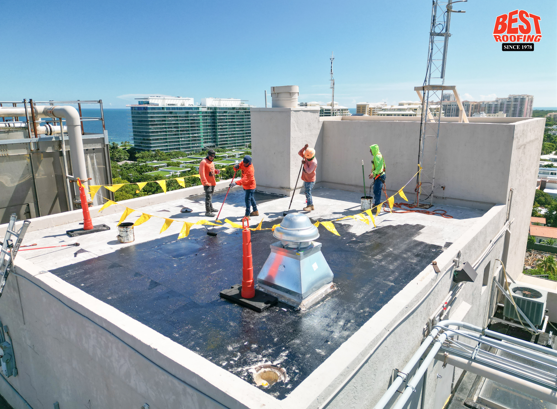
Coatings silicone, acrylic, or urethane are used to restore aging roofs and extend their life without a full replacement. They’re an economical option for industrial facilities managing tight CAPEX budgets.
Best for: Extending life of an existing roof
Why it works: Restores instead of replaces
Benefits:
- Potential to extend service life depending on existing conditions, coating type, and maintenance
- Seamless waterproofing
- UV and heat protection
- Reduces energy costs May improve surface reflectivity depending on coating type
- Minimizes operational disruption
Coatings are not solutions for roofs with saturated insulation or major structural concerns, but they’re excellent for roofs in fair condition.
7. Concrete Roofs
Heavy-duty industrial facilities sometimes use poured concrete roofing systems. These roofs are extremely strong but require structural support.
Best for: Large industrial plants, government, mission-critical sites
Why it works: Strength + longevity
Benefits:
- Exceptional durability
- Fire and impact resistant
- Minimal maintenance
- Highly energy efficient Can support energy-efficient performance when designed with appropriate insulation
- Lifespans of 50+ years Long service lives when properly designed and maintained
Concrete roofing is less common today, but many older Florida industrial facilities still have them.
10. Green Roofing Systems
Green roofs are built with vegetation over a waterproofing layer. While more common on commercial campuses, some industrial developments use them for sustainability goals.
Best for: ESG-driven projects, tech campuses, mixed-use industrial
Why it works: Energy and stormwater performance
Benefits:
- Stormwater control
- Improved insulation
- Reduced heat island effect
- Long lifespan
- Supports sustainability certifications
Green roofs are less common in Florida industrial sites but trending upward for new developments.
How to Choose the Right Roof for an Industrial Property
When evaluating industrial roofing types, consider:
1. Facility Operations
- Chemical exhaust
- High heat loads
- Foot traffic
- Equipment vibration
2. Roof Condition
- Deck integrity
- Drainage and slope
- Existing insulation
3. Long-Term Budget
- CAPEX vs. OPEX
- Energy-performance considerations
- Warranty requirements
4. Business Continuity
- Cost of downtime
- Impact of leaks on operations
- Tenant requirements
Final Takeaway: The Best Roofing Choice Depends on Your Facility’s Conditions
There’s no universal “best” system. The right choice depends on your property’s structure, environment, and operational needs. A thorough inspection and condition analysis and documented condition assessment is the only way to determine which system delivers the best performance and ROI for your operational and financial goals.
Plan Your Next Step With Confidence
If you're comparing industrial roofing types or planning upgrades, Best Roofing is here to help you evaluate your options with clarity and accuracy.
→ Need an assessment? Schedule a commercial roof inspection with Best Roofing today.
Our team will document your roof conditions, explain your system options, and help you plan your long-term maintenance strategy.
Related Articles