A commercial roof preventive maintenance checklist provides property managers and building owners with a documented, repeatable schedule for catching problems before they become expensive. When a leak shows up during a board meeting, or an insurance renewal asks for maintenance records your property doesn't have, the gap in your program becomes obvious fast.
This guide covers what belongs on that checklist, how maintenance changes by roof type, and what a documented program actually protects.
Why Does Commercial Roof Maintenance Matter?

Commercial roof maintenance matters because it catches small problems, such as a lifted seam, a clogged drain, or a cracked penetration, before they become full leaks. The National Roofing Contractors Association states that regular maintenance is the single most important factor, after proper installation, in how long a roof system lasts.
Roofs on a regular maintenance program typically last 30% or more longer than roofs that only get attention after a leak appears. Maintained systems also maintain their energy performance longer, avoid the operational disruption of emergency repairs, and let you plan roof-related capital spending years in advance rather than reacting to a crisis.
What Should Be on Your Commercial Roof Maintenance Checklist?
A commercial roof maintenance checklist should cover six areas, from routine inspection through documentation. Skipping any one of them leaves a gap in the record you'll need later.
Routine Comprehensive Roof Audits
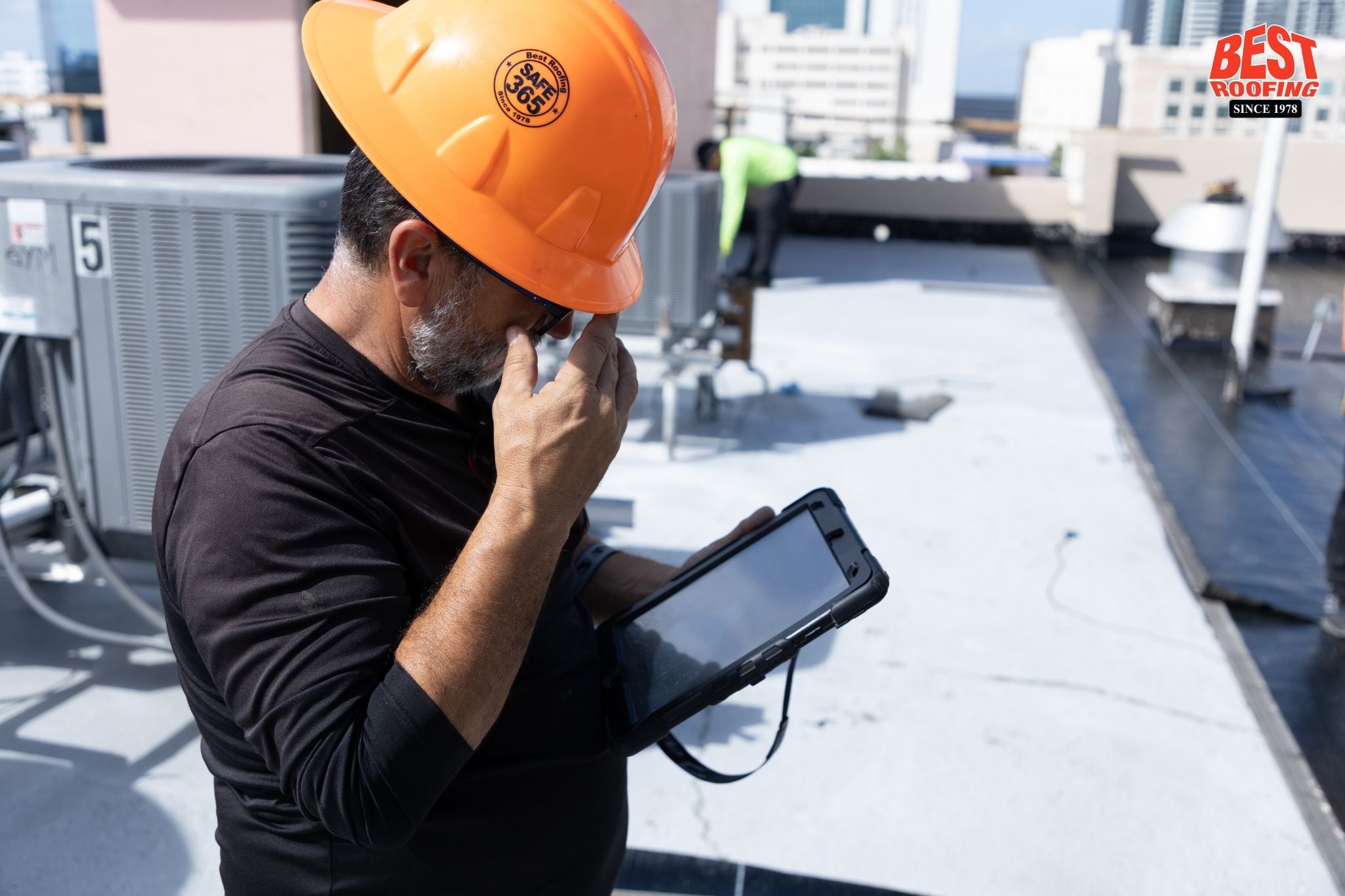
Best Roofing's Forensic Roof Audit, conducted by a trained Forensic Roof Specialist, reviews the entire roof system, membrane, flashing, drains, penetrations, and structural elements, not just the areas with visible problems. Schedule audits twice a year, in spring and fall, with an additional inspection after any major storm event. For a breakdown of inspection types and what each one typically costs, see Best Roofing's roof inspection guide.
Leak Detection and Repair
Every reported leak gets a response within 24 hours, with an on-site technician within 48 hours. Fast response limits water intrusion and keeps a small repair from becoming a larger one.
Clean and Clear Roof Drains
Clogged drains are one of the most common causes of ponding water and premature membrane failure. Drains, scuppers, and gutters get cleared of debris at every scheduled visit, not just when a problem is reported.
Inspect Roof Perimeter and Penetrations
Roof edges, parapet walls, and every penetration, HVAC curbs, vent stacks, conduit, are checked for separation, cracking, or failed sealant. These points fail more often than the open field of the membrane, and they're where most leaks originate.
Assess Roof Membrane and Surface
Technicians assess the membrane surface for blistering, cracking, punctures, and wear patterns using moisture surveys, water tests, and thermal imaging where warranted. Catching membrane degradation early is what makes the difference between a repair and a replacement.
Document Repairs and Develop a Roof History
Every audit, repair, and finding gets logged into a documented roof history. That record becomes the audit trail your board, your insurer, and any future buyer or lender will ask to see.
How Does Maintenance Differ by Roof Type?
Maintenance requirements shift based on the system installed. Flat roofing systems, built-up membranes, TPO, and modified bitumen are inspected for seam integrity, membrane wear, and drainage performance specific to each material. Sloped roofing systems, tile, shingle, and metal, are inspected for fastener condition, underlayment performance, and water-resistant or water-tight barrier integrity at every penetration and valley.
The right maintenance plan accounts for your roof's age, current condition, and the structural demands it's carrying, not a one-size-fits-all schedule applied regardless of system type.
How Does Your Roofing System Affect Your Maintenance Plan?
The system installed at replacement time, TPO, PVC, modified bitumen, tile, shingle, or metal, shapes what your maintenance program looks like for the life of the roof. Best Roofing's guide to choosing a commercial flat roofing system covers slope, budget, climate, and energy factors in full detail if you're evaluating a replacement. Getting that decision right up front makes the ongoing maintenance program simpler and less expensive to run.
What's the Long-Term Value of a Maintenance Program?
A documented maintenance program protects more than the roof membrane itself. Beyond extending the roof's service life, a maintained system helps prevent the moisture intrusion that leads to mold, and it keeps your property aligned with current building code requirements as they're updated.
Documented maintenance also reduces the frequency of surprise repairs and the disruption they entail, which is a meaningful factor for any board or owner managing an annual capital budget.
How Does Best Roofing Make Maintenance Easy?
Best Roofing's maintenance approach follows three steps: Diagnose, Design, and Deliver. Diagnose means a full audit of your roof's current condition. Design means a maintenance plan built around your specific roof type, age, and budget. Deliver means enrollment in Best Roofing's Umbrella Maintenance which bundles ongoing leak repair, annual check-ups, debris removal, and priority emergency response into one plan tailored to your budget and roof condition.
Every visit produces a complete report with before-and-after photos, so the documentation is ready whenever your board, insurer, or a prospective buyer asks for it.
Frequently Asked Questions
How often should a commercial roof be inspected?
At least twice a year, in spring and fall, with an additional inspection after any major storm. More frequent inspections may be warranted for older roofs or systems carrying heavy rooftop equipment.
What's included in a commercial roof maintenance visit?
A full audit of the membrane, drains, flashing, and penetrations; debris removal from drains and gutters; documentation of findings; and any minor repairs identified during the visit.
Does regular maintenance help with insurance requirements?
A documented maintenance history supports the inspection records many insurers require, including wind mitigation inspections. It doesn't guarantee a specific premium reduction, but it provides the documentation insurers require during underwriting and renewal.
Ready to Protect Your Roof?
A maintenance program is only as good as its documentation and its consistency. Best Roofing has been maintaining commercial roofs across South Florida since 1978, with a documented process that provides an audit trail rather than guesswork.
If your property doesn't have a current maintenance program, or your records don't go back far enough to satisfy your next insurance renewal, Contact Best Roofing for a comprehensive, FREE inspection and a maintenance plan built around your system. Let us help you keep your building dry, safe, and operating effectively.
WE SOLVE ROOF PROBLEMS.
Related Articles