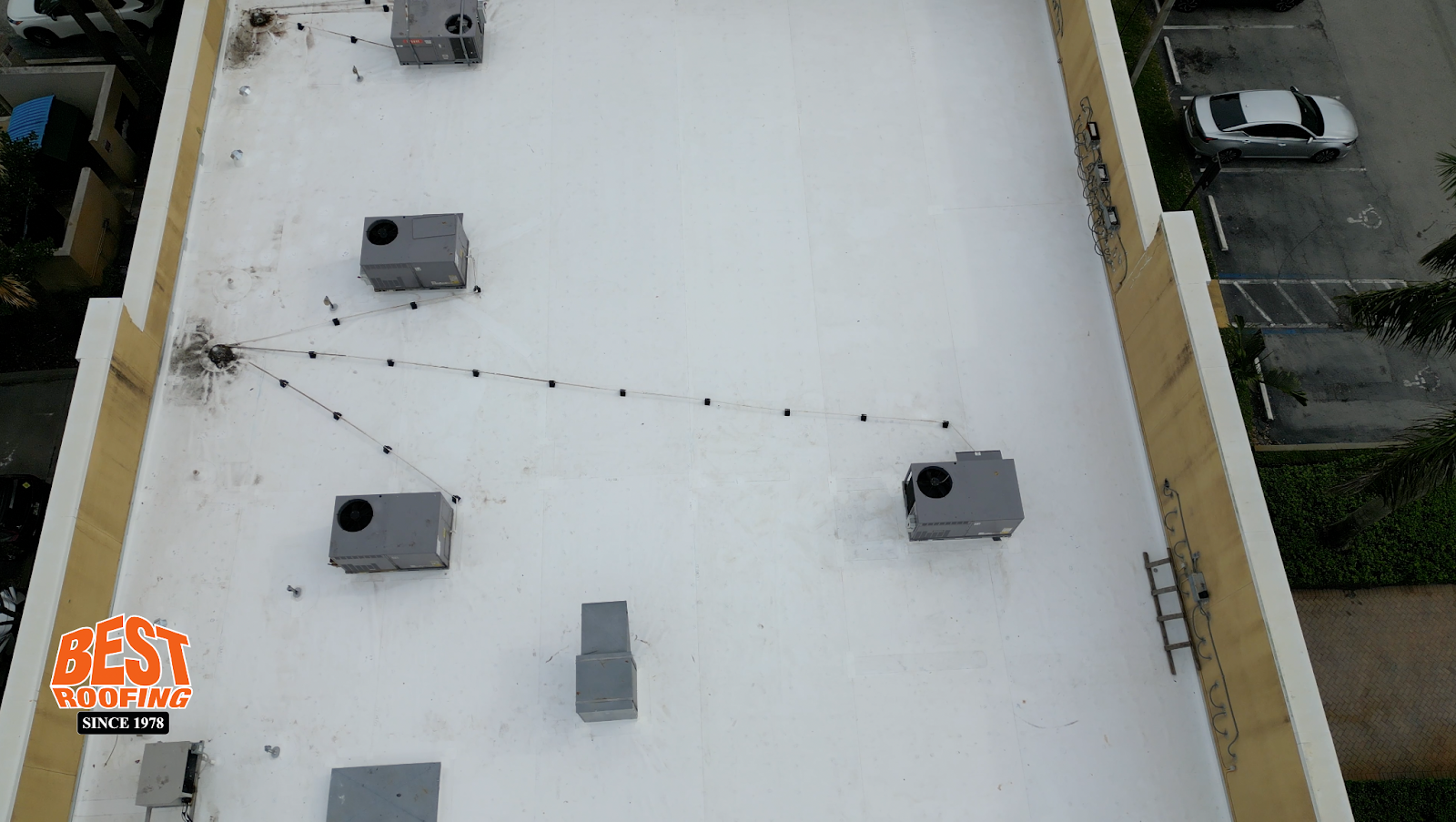

Warehouse roofing materials are the surface systems used to protect industrial and distribution facilities, each offering different levels of durability, energy performance, maintenance requirements, and lifecycle cost.
In Florida, selecting the right warehouse roofing material is especially critical. Extreme heat, UV exposure, heavy rainfall, ponding water, and tropical storms place constant stress on roofing systems and accelerate failure when materials are not properly matched to the environment.
In this guide, we break down the most common warehouse roofing materials used in Florida, explain how each performs under real-world conditions, and outline what to consider when choosing the best system for your facility. Whether you are replacing an aging roof or planning new construction, this article provides clear, practical guidance for long-term decision-making.
Why Does Your Warehouse Roofing Material Matter in Florida?
Your warehouse roofing material matters in Florida because it directly impacts how well your building withstands heat, UV exposure, heavy rainfall, and storm activity, as well as how much you spend on maintenance, energy, and unplanned repairs over time. Choosing the wrong material can shorten roof lifespan and increase operational risk.
Warehouse environments already place unique stress on roofs. Large open spans, interior temperature demands, heavy equipment, and constant movement of goods require a roofing system that performs consistently under pressure. Florida’s climate amplifies that need.
Selecting the right warehouse roofing material helps you:
- Minimize long term maintenance costs
- Improve energy efficiency
- Reduce the likelihood of leaks
- Extend roof lifespan
- Support insurance and warranty compliance
- Maintain operational uptime
Different materials offer different benefits. The goal is to match your warehouse’s conditions with a roofing material that can handle them.
What Are the Most Common Warehouse Roofing Materials?
The most common warehouse roofing materials used today are modified bitumen, built up roofing (BUR), and single ply membrane systems such as TPO and PVC. These materials are widely selected for industrial buildings because they offer proven performance across large roof areas, varying structural demands, and Florida’s challenging climate conditions.
Below are the primary warehouse roofing materials used across industrial buildings today.
1. Metal Roofing
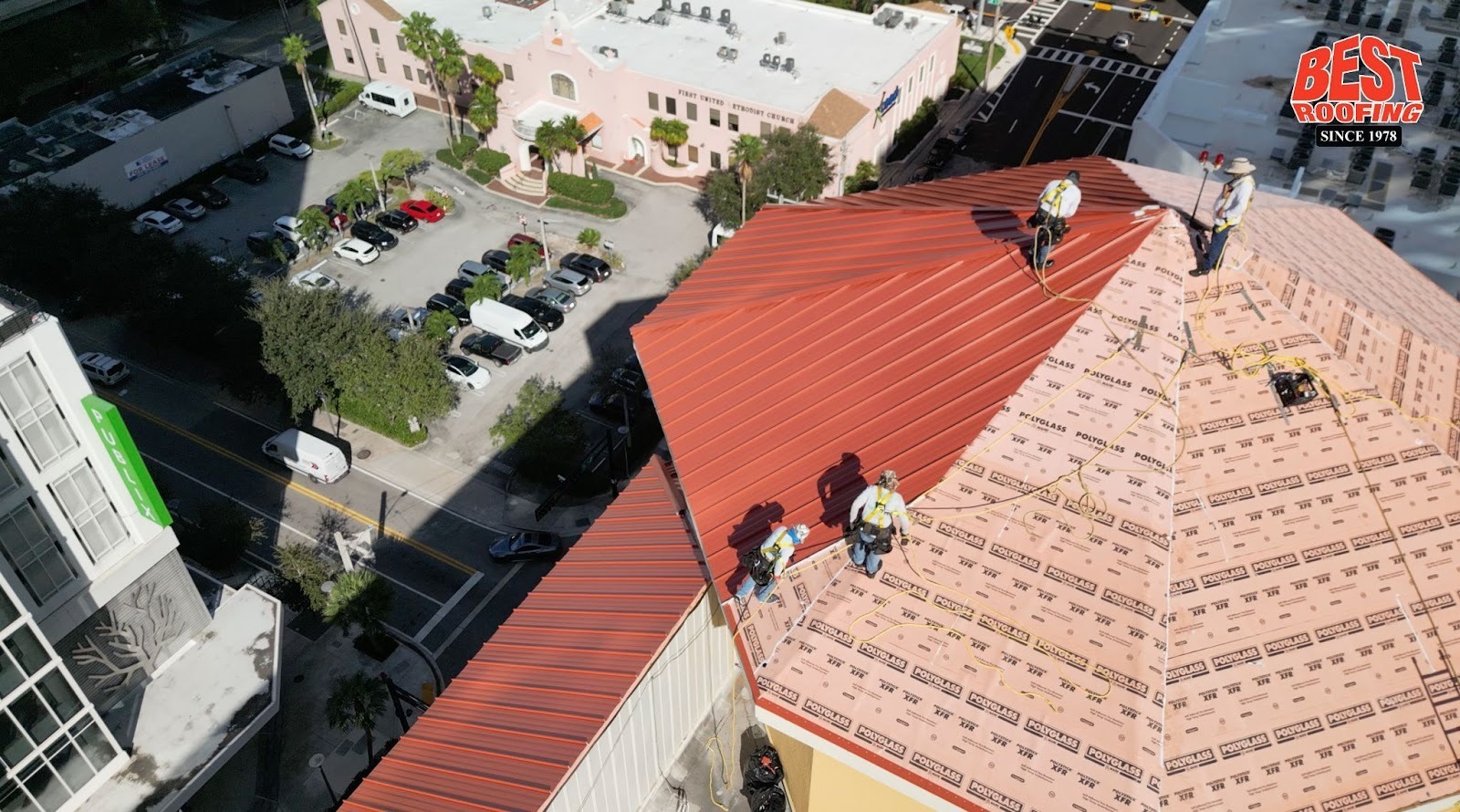
Metal roofing is one of the strongest and longest-lasting warehouse roofing materials available. Its durability and weather resistance make it a top choice for industrial properties across Florida.
Advantages
- Long Lifespan
- Excellent wind resistance for storm-prone areas
- Highly reflective coatings reduce cooling costs
- Works well on sloped warehouse roofs
- Low maintenance
Common metal types
- Steel. Most widely used and cost-effective
- Aluminum. Lightweight and corrosion-resistant, ideal for coastal regions
- Zinc. High durability for chemically demanding environments
Best for
Distribution centers, coastal facilities, sloped roofs, and high wind zones.
2. Modified Bitumen
Modified bitumen is a reliable option for flat and low-slope warehouse roofs. This asphalt-based material is reinforced with polymers to add strength and flexibility.
Advantages
- A multi-layer build provides strong waterproofing
- Handles foot traffic and tool use well
- High resistance to UV and heat
- Performs reliably during severe weather
Drawbacks
- Heavier than single ply membranes
- Higher installation cost than some alternatives
Best for
Warehouses needing durability, roofs with frequent service tech access, and industrial facilities with rooftop equipment.
3. TPO Roofing
TPO is rapidly becoming the most commonly installed warehouse roofing material due to its cost efficiency, reflectivity, and ease of installation.
Advantages
- Reflective white surface reduces cooling costs
- Lightweight and fast to install
- Resistant to chemicals, dirt, and bacteria
- Affordable for large square footage
Drawbacks
- More vulnerable to punctures than multi layer systems
- Seams must be monitored during maintenance
Best for
Large warehouse campuses, hot climates, and operations seeking lower energy costs.
4. PVC Roofing
PVC roofing is a top-tier single-ply material valued for its strength, fire resistance, and chemical resistance. It is widely used across industrial and manufacturing environments.
Advantages
- Excellent chemical and grease resistance
- Strong heat welded seams
- Highly reflective for energy savings
- Long-term durability with proper maintenance
Drawbacks
- Higher upfront cost
- Must be installed by trained professionals
Best for
Food processing warehouses, manufacturing facilities, chemical storage buildings, and environments with higher regulated safety needs.
5. Liquid Applied Roofing Systems
Liquid applied coatings are increasingly popular for warehouse roof restoration. These systems are installed over an existing roof to create a seamless, watertight membrane that extends roof life without full replacement.
Common coating types
- Silicone. Exceptional for resisting ponding water
- Urethane. Strong adhesion and high durability
- Acrylic. Cost-effective and excellent for metal roofs
Advantages
- Seamless application reduces leak risk
- Reflective options improve energy efficiency
- Restores an aging roof at a fraction of replacement cost
- Can be recoated multiple times
Drawbacks
- Existing roof must be suitable for restoration
- Requires dry weather for installation
Best for
Warehouses looking to avoid replacement costs, buildings with aging but repairable roofs, and properties needing improved reflectivity.
Warehouse Roofing Materials Comparison Chart:
|
Roofing Material |
Best Roof Type |
Maintenance Level |
Energy Efficiency |
Ideal Use Case |
|
Metal Roofing |
Sloped |
Low |
High with reflective coatings |
Long-term facilities, high wind zones, solar-ready buildings |
|
Modified Bitumen |
Flat / Low slope |
Moderate |
Moderate |
High-traffic roofs, equipment-heavy warehouses |
|
TPO |
Flat / Low slope |
Moderate |
High |
Large warehouse campuses, cost-sensitive projects |
|
PVC |
Flat / Low slope |
Moderate |
High |
Food processing, manufacturing, chemical exposure |
|
Liquid-Applied Coatings |
Flat / Low slope |
Low to moderate |
High |
Roof restoration, budget-conscious upgrades |
How Do You Choose the Right Warehouse Roofing Material?
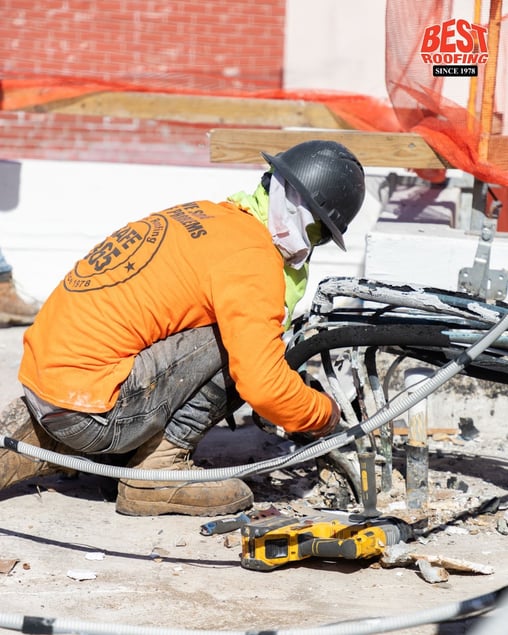
You choose the right warehouse roofing material by matching your facility’s climate exposure, roof design, operational demands, and long-term cost goals with a material that can perform reliably over its full lifecycle. The best choice is not based on price alone. It is based on durability, efficiency, and maintainability in Florida conditions.
Selecting the right material means evaluating your building’s specific needs across the following factors:
1. Climate demands
Florida roofs must resist heat, UV degradation, and tropical storms. Materials should be evaluated for long-term weather performance.
2. Roof slope
Certain materials, like metal, require slope for proper drainage, while membranes perform well on flat surfaces.
3. Budget and long-term value
Cheapest upfront rarely means lowest life cycle cost. Factor in maintenance, energy performance, and lifespan.
4. Operational temperature needs
Warehouses with sensitive inventory or temperature requirements benefit from reflective materials.
5. Expected roof traffic
Areas with frequent technician access need materials with strong puncture resistance.
6. Warranty and compliance
Some manufacturers require specific installation methods or maintenance programs.
Maintenance: The Key to Extending the Life of Any Warehouse Roofing Material
Even the best roofing material will fail early without proper maintenance. A proactive plan protects your investment and identifies issues before they become emergencies.
Essential warehouse roof maintenance
- Schedule inspections twice per year plus after major storms
- Clear debris that blocks drainage
- Repair punctures, seams, and flashing immediately
- Keep gutters and drains free flowing
- Document all inspections for insurance and warranty protection
Best Roofing’s preventive maintenance programs help extend material performance and reduce long term costs.
Frequently Asked Questions
What are the best roofing materials for warehouses?
Metal, TPO, modified bitumen, PVC, and liquid-applied coatings are among the best roofing materials for warehouses, depending on slope, climate, and budget.
What warehouse roofing material lasts the longest?
Metal roofing offers the longest lifespan, often exceeding 40 years with proper maintenance, followed by modified bitumen and PVC systems.
Which warehouse roofing material is best for hot climates?
TPO and PVC are highly reflective, making them ideal for reducing cooling loads in hot climates like Florida.
Can you install new roofing materials over an old warehouse roof?
Yes. Liquid-applied coatings can be applied over existing roofs if the underlying material is in good condition, avoiding full replacement.
What is the most cost-effective warehouse roofing material?
TPO is often the most cost-effective for large warehouses due to low installation costs and energy efficiency.
How do warehouse roofing materials impact long-term capital planning?
Warehouse roofing materials play a significant role in long-term capital planning because each system carries different maintenance requirements, inspection needs, and replacement timelines. Materials that perform well in Florida’s climate and are supported by proactive maintenance programs allow property managers to forecast costs more accurately, reduce emergency spending, and align roof investments with reserve planning and budgeting cycles.
Choosing Warehouse Roofing Materials That Protect Your Operations
Selecting the right warehouse roofing material is not just a maintenance decision. It is a long term investment in operational stability, energy efficiency, and asset protection. Our team can help you evaluate material performance, compare options, and determine the system that delivers the best return for your facility.
If you want clarity on the condition of your roof and expert guidance on the best materials for your warehouse, schedule a professional roof assessment with Best Roofing today. Our specialists will provide detailed findings, practical recommendations, and a plan that protects your building for years to come.
Related Articles