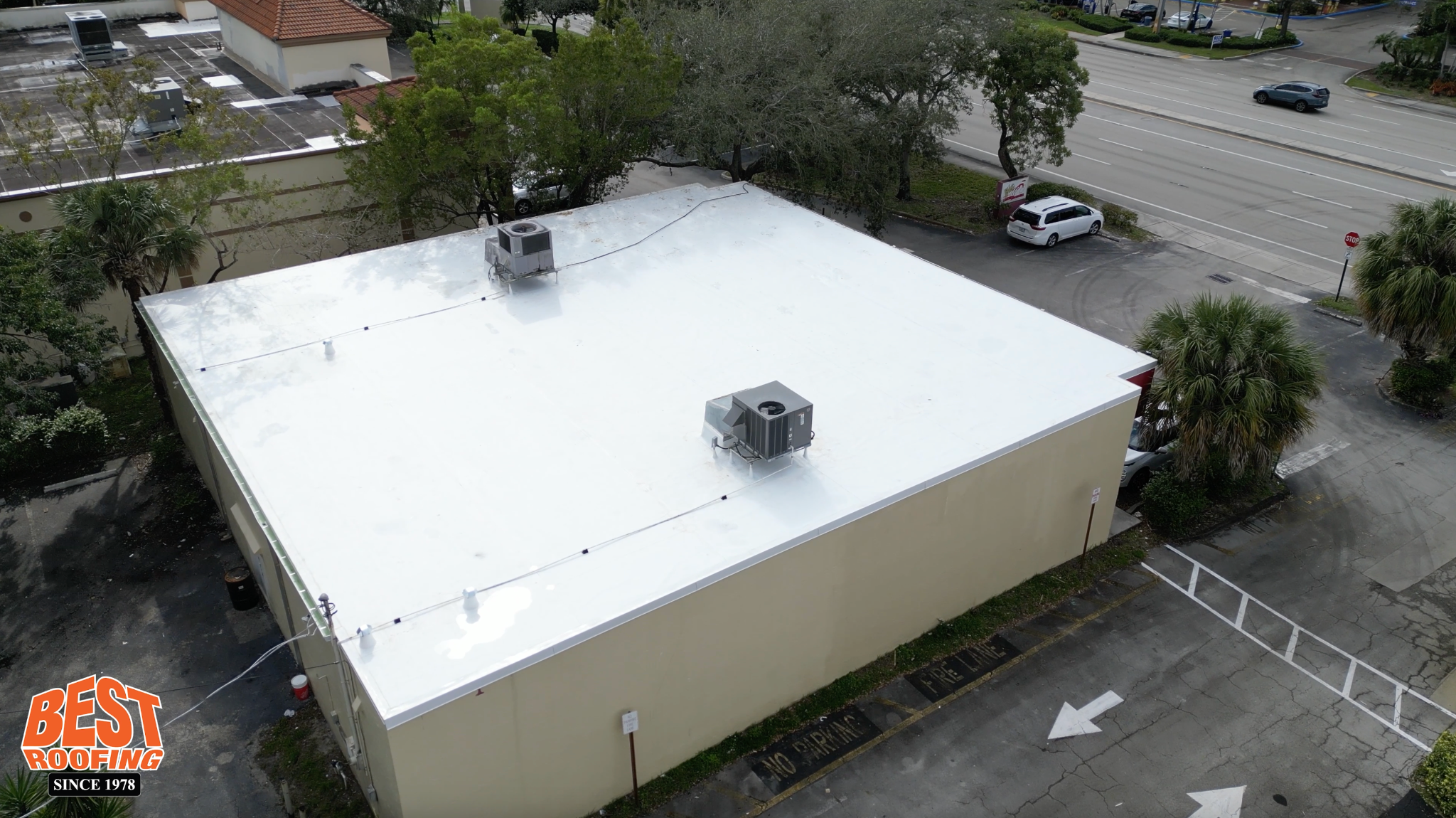

Warehouse roof types refer to the different roofing systems designed to protect large industrial and distribution facilities, each offering distinct advantages in durability, cost, energy performance, and maintenance requirements.
For Florida warehouses, selecting the right roof type is especially important. High heat, heavy storms, ponding water, and constant UV exposure accelerate roof wear and increase the risk of operational disruptions if the system is not suited to the environment.
In this guide, we break down the most common warehouse roof types used in Florida, including modified bitumen, built-up roofing, single-ply membranes, metal roofing, and liquid-applied systems. You will learn how each performs, what to consider when choosing between them, and how Best Roofing helps facility owners protect their long-term building investments.
Why Does Warehouse Roof Type Matter for Florida Facilities?
Warehouses depend on stable, protective roof systems. A roof failure can disrupt shipping, damage inventory, create safety hazards, and generate significant financial losses.
The right warehouse roof type helps you:
- Improve energy efficiency
- Reduce maintenance needs
- Extend roof life
- Prevent leaks and moisture damage
- Maintain code compliance
- Manage long-term capital planning
Choosing the wrong system can lead to early deterioration, high repair frequency, and difficulty handling Florida’s climate. That is why understanding warehouse roofing types is essential.
What are the Most Common Warehouse Roof Types?
The most common warehouse roof types are modified bitumen, built-up roofing (BUR), and single-ply membrane systems such as TPO and PVC. These systems are widely used across commercial and industrial warehouses because they balance durability, cost, energy performance, and scalability for large roof footprints.
Below are the warehouse roofing types most frequently used across commercial and industrial buildings today.
1. Modified Bitumen Roofing
Modified bitumen is a highly durable, reinforced asphalt membrane designed for longevity and flexibility. It is manufactured into rolled sheets and installed in multiple layers. Granulated options offer superior UV resistance, which is critical in Florida.
Benefits
- Strong impact and tear resistance
- Excellent for roofs with frequent foot traffic
- Good performance in storms
Considerations
- Higher installation cost
- Longer installation timeline
- Heavier than many other warehouse roof types
Modified bitumen is a reliable option for high-use warehouse roofs that require durability and consistency.
2. Built-Up Roofing (BUR)
Built-up roofing, often referred to as BUR, has been used for more than 150 years. It includes multiple layers of asphalt and roofing felts, topped with gravel, a mineral cap sheet, or reflective aluminum.
Benefits
- Extremely long lifespan
- Stable under heavy UV exposure
- Excellent insulation
- Strong performance in a variety of climates
Considerations
- High installation cost
- Longer labor time
- Heavy system that requires structural support
Even though BUR is not as common as it once was, it remains one of the most durable warehouse roofing types available.
3. Single Ply Roofing (TPO, PVC)
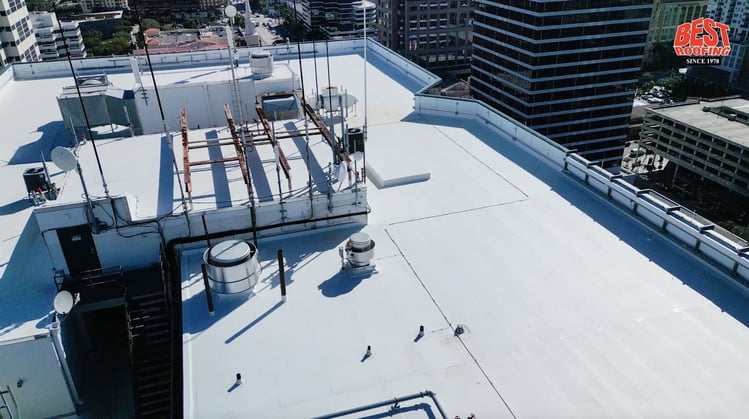
Single-ply membranes remain one of the most popular warehouse roof types due to their cost-effectiveness, speed of installation, and energy efficiency. They include three main systems: TPO and PVC.
TPO
- Reflective white surface reduces cooling costs
- Lightweight
- Cost effective
PVC
- Similar appearance to TPO
- Superior chemical resistance
Considerations
- Single-layer membranes are more vulnerable to punctures
- Seams can be leak points without proper upkeep
- Shorter lifespan than multi-layer systems
Single-ply roofing works well on large warehouse campuses due to installation efficiency, but it must be maintained regularly to prevent seam failures.
4. Metal Roofing
Metal roofing continues to be one of the strongest and longest-lasting warehouse roofing systems. It can last 40 to 80 years depending on the type of metal and maintenance program.
Common metal types
- Steel. Most common and cost-effective
- Aluminum. Lightweight and corrosion-resistant
- Zinc. Excellent for coastal environments with high salt exposure
Metal warehouse roofs are available in two styles:
Standing seam (concealed fastener)
- Sleek appearance
- Higher performance and longevity
Exposed fastener
- More affordable
- Faster installation
Benefits
- Exceptionally long lifespan
- High wind and weather resistance
- Excellent structural strength
- Works well with solar panel integration
Considerations
- High upfront cost
- Vulnerable to fastener issues if not maintained
- Requires proper slope for drainage
Metal remains one of the best warehouse roofing types for long term performance, especially in storm heavy regions.
5. Liquid Applied Roofing

Liquid applied roofing, also known as fluid applied systems or roof coatings, is becoming one of the fastest-growing warehouse roof types due to its cost savings and flexibility. These coatings are applied directly over an existing roof to create a seamless, watertight barrier.
Common coating types
- Silicone. Exceptional ponding water resistance
- Urethane. Higher durability and adhesion
- Acrylic. Cost-effective, great for metal surfaces
Benefits
- Seamless system eliminates many leak points
- Reflective surface improves energy efficiency
- Extends the life of the existing roof
- Costs about half as much as a replacement
- Can be recoated multiple times
Considerations
- Substrate must be in good enough condition for restoration
- Installation requires dry weather
Warehouse owners looking to reduce capital spending often choose liquid applied roofing as part of a restoration strategy.
In Simple Terms: Comparing Warehouse Roof Types
In simple terms, warehouse roof types can be compared based on durability, cost, and maintenance needs:
- Metal roofing offers the longest lifespan and strongest storm resistance but requires higher upfront investment.
- Built-up roofing provides exceptional durability and insulation but comes with higher weight and installation time.
- Modified bitumen balances durability and flexibility for high-traffic warehouse roofs.
- Single-ply systems like TPO and PVC are cost-effective and energy efficient but require regular seam maintenance.
- Liquid-applied roofing is ideal for extending the life of an existing roof while reducing capital expenses.
How Do You Choose the Best Warehouse Roof Type?
You choose the best warehouse roof type by evaluating your building’s structure, Florida climate exposure, budget, energy performance goals, and long-term maintenance requirements. The right system is not the most popular option. It is the one that aligns with how your warehouse operates today and how you plan to manage it over time.
With several warehouse roofing types available, selection should be based on the following key considerations:
Key considerations
- Florida climate and storm exposure
- Budget and long-term investment strategy
- Roof slope and structural load capacity
- Energy efficiency goals
- Foot traffic needs
- Existing roof condition
- Warranty requirements
- Local building codes
A property manager should also consider ongoing maintenance costs. Even the highest quality warehouse roof type will fail early without inspection and preventive care.
Frequently Asked Questions
What are the most common warehouse roof types?
The most common warehouse roof types include modified bitumen, built-up roofing (BUR), single-ply membranes like TPO and PVC, metal roofing, and liquid-applied coatings.
Which warehouse roof type lasts the longest?
Metal roofing systems typically offer the longest lifespan, lasting 40 to 80 years with proper maintenance. Built-up roofing also offers long durability.
What’s the most cost-effective warehouse roofing system?
Single-ply membranes like TPO and PVC are cost-effective for large warehouses due to fast installation and good energy efficiency.
Can I install a new warehouse roof over the existing one?
Yes, in many cases. Liquid-applied coatings can be installed over an existing roof if the substrate is in good condition, offering a cost-effective restoration option.
What’s the best warehouse roof type for Florida’s climate?
In Florida, metal roofing and modified bitumen perform well due to high UV resistance and durability in storm conditions. Proper drainage and heat reflection are key factors.
Which warehouse roof type has the lowest lifecycle cost?
The warehouse roof type with the lowest lifecycle cost depends on maintenance and usage. While metal roofing has a higher upfront cost, it often delivers the lowest cost over time due to its long lifespan. Liquid-applied systems can also offer low lifecycle costs by extending the life of an existing roof and delaying full replacement.
Which warehouse roofing types are easiest to maintain at scale?
Single-ply systems and metal roofing are generally easier to maintain across large warehouse portfolios. Single-ply roofs allow for fast inspections and localized repairs, while metal systems benefit from durability and long inspection intervals when properly maintained.
How does warehouse roof type affect insurance and inspections in Florida?
Warehouse roof type can influence insurance eligibility and inspection requirements in Florida. Durable systems with documented maintenance histories are viewed more favorably by insurers. Roofs with poor drainage, frequent leaks, or unclear documentation may lead to higher premiums or coverage limitations.
Getting the Right Warehouse Roof Starts With the Right Partner
Understanding warehouse roof types is the first step. Choosing the right roofing partner is the second. Best Roofing has worked with commercial property managers across Florida for more than 47 years, providing inspections, maintenance, repairs, and replacement solutions designed for long term performance.
If you want help evaluating your warehouse roofing system or want guidance on selecting the right solution, our team is here to support you.
Schedule a professional roof assessment today and get clear, expert recommendations based on your building's needs.
Related Articles